For prospective picklers
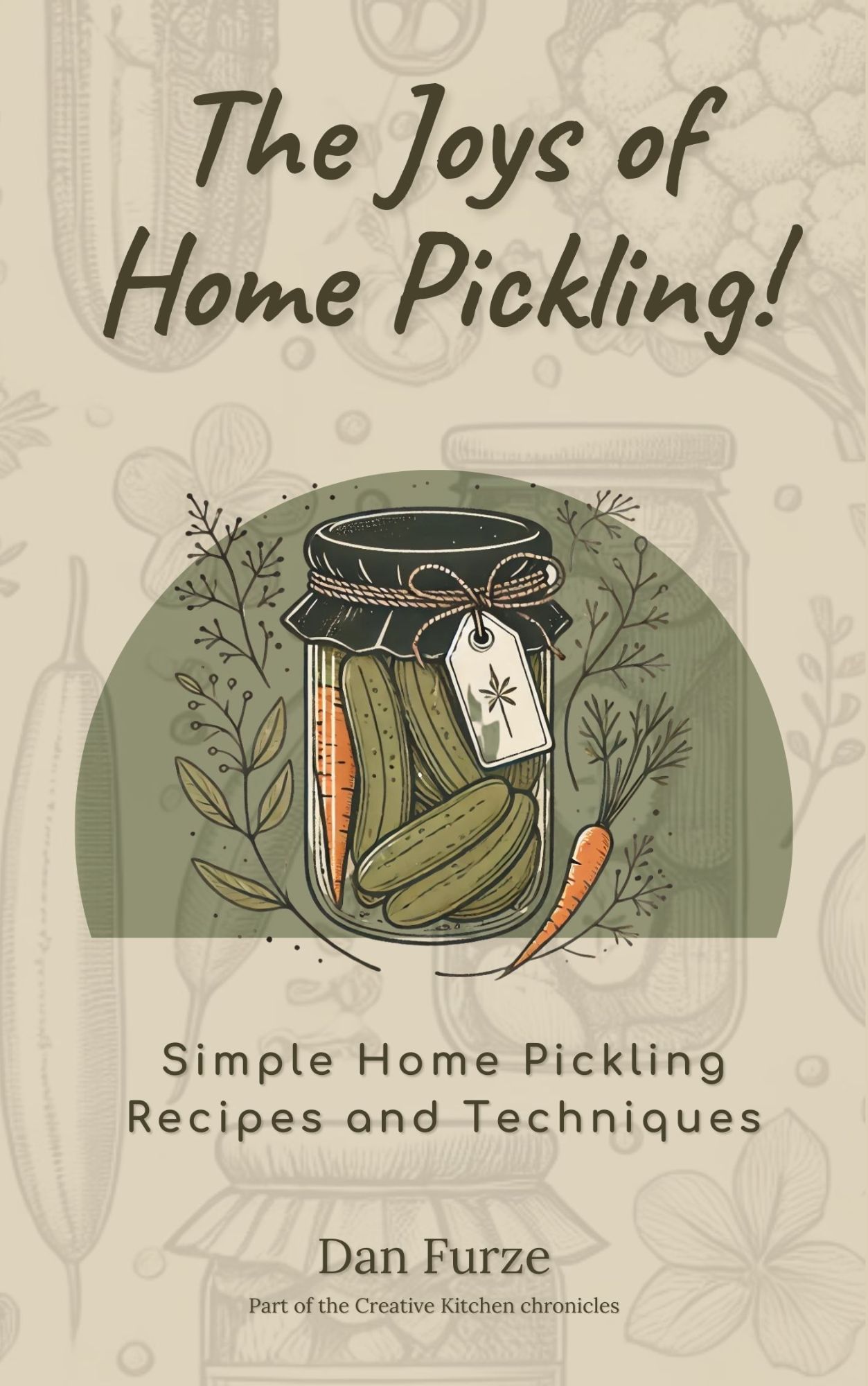
The Joys of Home Pickling!
Simple Home Pickling Recipes and Techniques
Some hobbies need a spare room. Pickling needs a saucepan, a jar, and about twenty minutes of your afternoon. If you've ever eyed a jar of gourmet pickles at the deli counter and thought “surely I could just... do this myself” - you're right. You can.
Or get the hardcover ($15.99) or Kindle ebook ($3.99)
Master three moves
Every recipe is just a variation on a theme
- 1.
Brining
Salt draws out moisture, firms things up, and sets the stage for everything that follows.
- 2.
Fermenting
Good bacteria do the heavy lifting, building tang and complexity with no vinegar required.
- 3.
Preserving
Vinegar keeps the bad stuff out, so a jar you made three weeks ago is still a jar worth opening.
From the book
Grab a jar and try one
Classics
Traditional Dill Pickles
The classic, the original, the one that started it all. If pickles were a boy band, the cucumber pickle is the lead singer, and everyone else is backing vocals.
- Method
- Water-bath canned
- Ready in
- Ready in at least 2 weeks
Ferments
Kimchi
Kimchi is a spicy, flavourful Korean pickle made from napa cabbage and other vegetables. It's packed with umami and perfect for adding a kick to your meals.
- Method
- Fermented
- Ready in
- Ready in 3-7 days
Global
Pink Pickled Turnips
Punchy Middle Eastern turnip pickles, turned vividly pink by a single small beetroot tucked into the jar.
- Method
- Fridge pickle
- Ready in
- Ready in 5-7 days
Gifting
Spiced Pickled Cranberries
A festive gift jar designed to look as good as it tastes - genuinely useful, impossible to regift without someone noticing, and it looks like you tried a lot harder than you actually did.
- Method
- Fridge pickle
- Ready in
- Ready in 3 days
The kit
Five things, and you probably own three
You don't need a lab full of gadgets to get started. Most of what you need is already hiding in your cupboards.
Glass jars and lids
Your pickles' new home. Glass only; plastic won't cut it. Think of these as luxury apartments for your cucumbers.
Large pot
For boiling your jars. A spa treatment, basically, and it sterilises them to perfection.
Tongs
For fishing out hot jars without turning this into a first-aid tutorial.
Glass weights
Keep your veggies submerged under the brine, sunbathers-under-SPF-50 style.
Funnel
Unless you have the steady hands of a brain surgeon, this saves your countertops from a brine makeover.
The know-how
Why a recipe works, not just what to do
From Chapter 9
Water-bath canning
How to can pickles safely in a boiling water bath: sterilising jars, headspace, processing times, checking the seal, and which vinegar and salt to use.
From Chapter 9
Fridge pickles
Refrigerator pickles need no canning: pack the jar, pour over the brine and chill. How to make them, how long they take, and how long they last.
From Chapter 4
Lacto-fermentation
How lacto-fermentation works, how long it takes, why salt and submersion matter, and when cloudy brine is normal - the basics behind sauerkraut and kimchi.
From Chapter 9
Storage and shelf life
How long homemade pickles last and how to store them: up to a year when canned, 1-2 months once opened, 2-4 weeks for fridge pickles.
From Chapter 11
Troubleshooting
Why homemade pickles go mushy, why some float and some sink, why brine turns cloudy, and what causes off-flavours: the causes and how to fix each one.
From Chapter 7
Pickling brine
The basic pickling brine ratio, how to make it, how to change the flavour safely, and why leftover brine belongs in a dressing rather than a new jar.
From Chapter 7
Choosing vinegar
The best vinegar for pickling: white for savoury pickles, apple cider for sweet ones, malt for British pickled onions. All need at least 5% acidity.
From Chapter 8
Small-kitchen pickling
How to pickle with limited space: small-batch jars, compact kit that earns its keep, storage tricks for a cosy kitchen, and scaling recipes down safely.
From Chapter 10
Pickles as gifts
How to turn a jar of homemade pickles into a gift: which vegetables look best, choosing and dressing the jar, what to put on the label, and keeping it safe.
From Chapter 10
Christmas gift jars
Which homemade pickles make good Christmas gifts, when to start each one so it is ready in time, which can go in a hamper, and how to wrap them.
Inside the book
Eleven chapters, from first jar to gift jar
More than 30 recipes and brines - classic dill pickles to kimchi, small-batch jars for the tiniest of kitchens, pickling traditions from around the world, and a whole chapter on turning a finished pickle into a present.
Why bother?
- Cheaper.
- Seasonal veg lasts months longer, for a fraction of what the fancy jars cost.
- Healthier.
- You control exactly what goes in. No mystery preservatives.
- Tastier.
- Because you decide how sweet, sour, or downright fiery it gets.
- Genuinely satisfying.
- There’s a particular kind of smug you can only earn by opening a jar you made yourself.
Or get the hardcover ($15.99) or Kindle ebook ($3.99)
- 1
Getting Started
The kit, the ingredients, and the safety basics.
- 2
- 3
- 4
- 5
- 6
- 7
Pickling Liquids and Brines
Six brines, and how to build your own.
- 8
- 9
Preserving and Storing Pickles
Canning, fridge pickles, and shelf life.
- 10
- 11
Troubleshooting and Tips
Mushy pickles, cloudy brine, and the FAQs.
From the introduction
Salt, vinegar, and time don't go out of fashion.
Pickling is thousands of years old, and it has never once needed updating. The techniques in this book will taste exactly as good next year, or in ten years, as they do today. The jars will still seal. The vinegar will still do its job. And your pickles will still taste better than anything shrink-wrapped from the shop.
Already have the book?
Tell other picklers what you think
If you've got a spare minute, leaving a review on Amazon makes a genuine difference - it's how other pickling-curious people find this book, and it helps far more than you'd think for an independently published title.
Leave a review on Amazon